Introduction
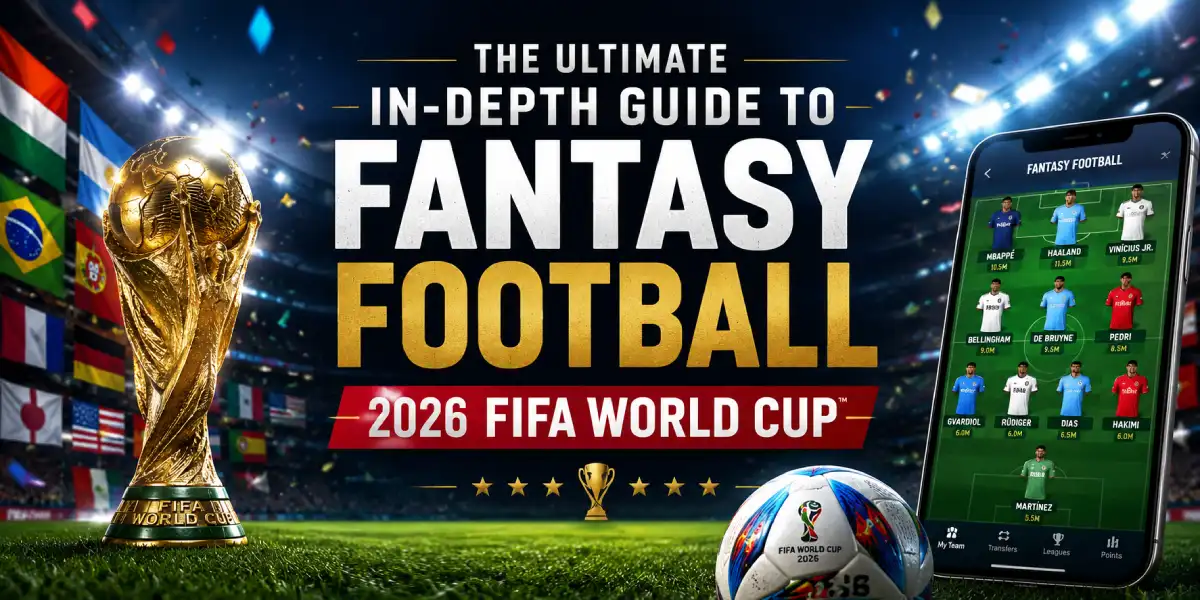
Fantasy football has evolved from a casual pastime into a sophisticated competitive arena where knowledge, data analysis, and strategic thinking separate winners from the rest. The 2026 FIFA World Cup presents a unique opportunity for fantasy enthusiasts to compete on the grandest stage of international football.
This comprehensive guide combines historical data, advanced analytics, psychological insights, and proven strategies to help you build a championship-caliber fantasy team.
Why Fantasy Football Matters
Beyond entertainment, fantasy football serves as:
- Educational Tool: Deepens football knowledge and tactical understanding
- Community Builder: Connects millions of fans globally
- Financial Opportunity: Prize pools reaching millions across platforms
- Predictive Model: Tests your ability to forecast real-world outcomes
Tournament Overview
2026 FIFA World Cup Structure
Host Nations: United States, Canada, and Mexico (first three-nation host)
- Unique climate conditions in different regions
- Travel challenges for participating teams
- Extended tournament duration (June-July)
Tournament Format:
- 32 teams divided into 8 groups of 4
- 64 matches total (increased from previous 64-match format)
- Group Stage: 3 matches per team (June 13 – July 4)
- Knockout Stage: Round of 16, Quarterfinals, Semifinals, Final
- Match Schedule: Multiple matches daily creates dynamic fantasy environment
Expanded Participation
Key Changes from 2022:
- 3-nation hosting creates logistical considerations
- Time zones affecting live viewing and decision timing
- New qualifying pathways affecting team quality
- Potential surprise entrants and emerging football nations
Tournament Momentum & Phases
Phase 1 (Group Stage): Teams cautious, focus on qualification
- Conservative team selections
- Limited attacking play
- Strong defensive discipline
- Fantasy scores typically lower
Phase 2 (Round of 16 & Quarterfinals): Intensity increases
- Teams push for victories
- More attacking initiatives
- Higher scoring potential
- Key players emerge as differentials
Phase 3 (Semifinals & Final): Maximum intensity
- All-or-nothing mentality
- Highest quality football
- Explosive scorelines possible
- Biggest fantasy point opportunities
Understanding the Fundamentals
Core Concept
Fantasy football is a zero-sum competitive game where:
- Your competitors are other players, not the platform
- Platform success = relative performance against others
- Absolute points matter less than percentile ranking
- Timing and differentiation create competitive advantage
Key Terminology
Gameweek (GW): A set period of matches (typically 1-3 real matches)
- World Cup has 5 gameweeks in group stage
- Knockout stage = single-elimination gameweeks
Points Per Million (PPM): Efficiency metric
- Total points earned ÷ price (in millions)
- Identifies best value players
- Changes dynamically based on performance
Ownership %: Percentage of players selecting a specific player
- High ownership (>50%): Safe but non-differentiating
- Mid ownership (15-50%): Balanced risk/reward
- Low ownership (<15%): Differential with upside
Captain Boost: Captain scores double points for that gameweek
- Most critical decision each week
- Multiplies expected value by 2x
- Often determines league rankings
Vice-Captain (VC): Auto-replaces captain if they don’t play
- Insurance mechanism
- Should be nearly as strong as captain
Bench: 4-5 reserve players replacing injured/benched players
- Automated substitution based on platform rules
- Can make or break a gameweek
Wildcard: Unlimited transfers in one gameweek
- Typically 2-4 uses per competition
- Strategic use essential to long-term success
Read more : Best Betting Sites in India 2026: Top 10 Platforms
Advanced Scoring Analysis
Expected Points Framework
Beyond raw statistics, fantasy scoring reflects actual playing time and positional performance:
Playing Time Scoring
Goalkeepers (GK):
– 0-59 minutes: 0 points (confirmed to start)
– 60+ minutes: 2 points per appearance
– Sub: typically plays <60 minutes
Defenders (DEF):
– 0-59 minutes: 1 point
– 60+ minutes: 1 point per appearance
Midfielders (MID):
– 0-59 minutes: 1 point
– 60+ minutes: 5 points
Forwards (FWD):
– 0-59 minutes: 1 point
– 60+ minutes: 5 points
Critical Insight: More playing time ≠ more points necessarily. A 45-minute super-sub who scores might earn fewer points than a 90-minute defensive player.
Performance Scoring Depth
Goals Scored:
- Goalkeeper: 10 points (extremely rare)
- Defender: 10 points
- Midfielder: 5 points
- Forward: 5 points
Why the Discrepancy?: Reflects rarity and impact. A defender scoring is far more unusual and valuable than a forward scoring.
Assists:
- All positions: 3 points
- Key metric for midfielders and attacking defenders
Clean Sheets (GK/DEF only):
- Basic: 4 points
- Enhanced by defensive stability
Defensive Contributions:
- Tackles/Blocks: Some platforms award 0.5-1 point
- Interceptions: 0.5 points on some platforms
- Clearances: Minimal or no points on most
Negative Performance:
- Yellow Card: -1 point (accumulates)
- Red Card: -3 points (immediate ejection)
- Own Goal: -2 points
- Penalty Conceded: -1 point (varies by platform)
Point Volatility Analysis
High Volatility Players:
- Attacking wingers/forwards
- Penalty takers
- Injury-prone players
- Young/unproven players
Low Volatility Players:
- Defensive specialists
- Regular starters from stable teams
- Veteran captains
Goldilocks Zone:
- Mid-priced attackers with consistent starts
- 40-50 points per tournament realistic
- Lower variance than elite stars
Squad Building Frameworks
Formation Theory
Optimal Formation for Value:
The mathematical optimal formation depends on your budget and playing style:
Formation: 3-5-2 (1 GK, 3 DEF, 5 MID, 2 FWD)
- Maximizes differential positions (midfielders)
- Provides defender bench depth
- Proven successful in World Cup fantasy
Formation: 4-4-2 (1 GK, 4 DEF, 4 MID, 2 FWD)
- Balanced, traditional approach
- Good defensive foundation
- Requires precise midfielder selection
Formation: 4-3-3 (1 GK, 4 DEF, 3 MID, 3 FWD)
- Forward-heavy for goal-scoring upside
- Requires premium forward investment
- Higher variance, higher ceiling
Squad Composition Strategy
Tier System Approach:
Premium Tier ($8M-12M):
- Absolute elite: Haaland-level players from tournament favorites
- Guaranteed starting XI
- Highly owned
- Reliable floor (8-12 points/match baseline)
- Example positions: Star strikers, elite playmaking midfielders
Upper Mid-Tier ($6M-8M):
- Strong international players
- Very likely starters
- Good balance of ownership (30-60%)
- Differential opportunities at lower end
- Example: Regular lineup players from strong nations
Mid-Tier ($4M-6M):
- Essential value creators
- Probable starters
- Ownership varies (20-40%)
- Where most points come from
- Example: Attacking midfielders from second-tier nations
Value Tier ($2M-4M):
- Budget fillers and bench players
- Rotation risks but potential game-changers
- Low ownership (<20%)
- Differential potential
- Example: Young prospects, backup strikers
Budget Allocation Models
Model A: Star-Heavy (3 Premium + Multiple Value)
– 3 players @ $10M each = $30M
– 5 players @ $6M each = $30M
– 7 players @ $5M-$3M = $30M
– 2 players @ $2.5M = $5M
Total: $95M (leaves room to upgrade)
Pros: Ceiling high, ownership advantage
Cons: Limited bench depth, injury-vulnerable
Model B: Balanced (Mix across tiers)
– 1 player @ $11M = $11M
– 2 players @ $8M each = $16M
– 4 players @ $6M each = $24M
– 5 players @ $4M each = $20M
– 3 players @ $3M each = $9M
– 2 players @ $2.5M = $5M
Total: $85M (maximum flexibility)
Pros: Balanced risk, adaptable
Cons: No superstars, average ceiling
Model C: Value-Stacked (Maximize output per pound)
– 2 players @ $8M each = $16M
– 3 players @ $6.5M each = $19.5M
– 5 players @ $5M each = $25M
– 5 players @ $3.5M each = $17.5M
– 2 players @ $2M = $4M
Total: $82M (highly flexible)
Pros: Best PPM, flexibility for transfers
Cons: Fewer premium assets, lower ownership leverage
Squad Structure: The Holy Trinity
Three-Player Mini-Stack:
- Select 3 players from same attacking team
- Creates correlated upside (if team wins 4-0, all three profit)
- Multiplies ceiling potential
- Diversify which team’s stack you choose
- Example: Select 2 attacking mids + 1 forward from France
Cautious Stacking:
- Limit to 2-3 mini-stacks across squad
- Avoid over-concentration in one result
- Provides upside without excessive risk
- Balances correlation exposure
Bench Strategy:
- Bench player #1: Same position as starter (injury cover)
- Bench player #2: Different position with rotation risk
- Bench player #3-5: Lottery picks or super-subs
- Bench ownership: 5-10% of total players
Budget Allocation Strategy
Understanding the Budget Curve
Budget allocation isn’t linear. Player pricing follows an exponential curve:
$2M = Baseline (backup players, 3-5 pts/week)
$3M = Minor upgrade (+0.5 pts/week)
$4M = Solid starter (+1 pt/week)
$6M = International player (+1.5 pts/week)
$8M = Elite player (+2 pts/week)
$10M = Superstar (+2 pts/week)
$12M = Generational talent (+0.5 pts/week more)
Critical Insight: Premium pricing doesn’t scale linearly with expected output.
Budget Efficiency Zones
Efficiency Range #1: $3.5M-$5.5M (Best PPM)
- Least premium required
- Natural international starters
- High expected minutes
- Optimal budget allocation zone
Efficiency Range #2: $6M-$7.5M (Good Value)
- Elite role players
- Consistent performers
- Lower injury risk than super-premiums
Premium Trap: $10M-$12M
- Often over-priced for tournament format
- Competing clubs may rotate
- Consider opportunity cost
Dynamic Budget Building
Phase 1 (Weeks 1-2): Invest heavily in value
- Lock in best PPM players
- Establish foundation
- Preserve transfer flexibility
- Ownership: Aim for ~60-70% average
Phase 2 (Week 3-4): Begin differentiation
- Use data to identify emerging threats
- Make selective upgrades
- Target low-ownership differentials
- Ownership: Aim for ~45-55% average
Phase 3 (Week 5+): Leverage information advantage
- React to form and injuries
- Exploit emerging patterns
- Use wildcards strategically
- Ownership: Aim for 25-35% average (more differential)
Player Evaluation Methods
The Advanced Player Profile
Beyond basic statistics, professional fantasy players evaluate using:
1. Expected Goals (xG) & Expected Assists (xA)
What They Measure:
- xG: Quality of shots, likelihood of scoring based on positioning
- xA: Quality of passes, likelihood of resulting in goals
How to Use:
- Compare xG to actual goals: Underperforming or overperforming?
- Monitor xA trends: Increasing playmaking creates upside
- Use over 2-3 matches to smooth volatility
Example Analysis:
Player A: 2 goals in 3 matches (xG = 1.8)
Analysis: OVERPERFORMING – regression likely
Player B: 0 goals in 3 matches (xG = 2.5)
Analysis: UNDERPERFORMING – positive regression coming
2. Chance Creation & Conversion Metrics
Key Indicators:
- Shots on target per 90 minutes
- Conversion rate (goals/shots)
- Shot placement (central vs. peripheral)
- Cross completion percentage
Fantasy Application:
- High shot volume + low conversion = buy opportunity
- Improving conversion rate = price increase coming
- Positional context (wingers vs. strikers) matters
3. Defensive Positioning & Recovery
For Defenders/Defensive Mids:
- Tackle + interception per 90 minutes
- Pressure success rate (% of defending actions resulting in ball recovery)
- Pass completion under pressure
- Aerial duel win percentage
Fantasy Application:
- Defenders improving position stats = cleaner sheets incoming
- High tackles may indicate team’s poor possession (negative)
- Aerial dominance = corner/set-piece opportunities
4. Fitness & Load Management
Critical Factors:
- Cumulative minutes played
- Rest days between matches
- Club fixture congestion (tournament + domestic)
- Historical injury patterns
Tournament-Specific:
- World Cup: No mid-week club matches (rest advantage)
- Players from eliminated nations: Extra rest
- Multi-competition players: Higher injury risk
5. Positional Context
Role vs. Position:
- Official position: Listed at team (GK, DEF, MID, FWD)
- Actual role: How team deploys (some mids play defensive, some forwards play midfield-adjacent)
Fantasy Implications:
- Fullbacks playing attacking roles = high assist potential
- Defensive mids playing deeper = fewer chances
- Position flexibility creates evaluation opportunities
6. Team Quality Factors
Team Strength Indicators:
- Offensive output: Goals scored
- Defensive stability: Clean sheets/goals conceded
- Possession & pass completion
- Expected points over tournament
Creating Rankings:
Tier 1 (Expected Winners): France, Argentina, Brazil, England
– Multiple star players
– Multiple offensive outlets
– Defensive solidity
– Variance: Lower
Tier 2 (Contenders): Germany, Spain, Netherlands, Belgium, Uruguay
– Strong core players
– One-dimensional attacks sometimes
– Vulnerable positions
– Variance: Medium
Tier 3 (Challengers): Portugal, Mexico, Japan, South Korea, etc.
– Individual standouts
– Team quality inconsistent
– Likely eliminated early
– Variance: Higher
Tier 4 (Underdogs): Less developed nations
– Surprise performances possible
– High variance
– Differential opportunities
– Likely eliminated group stage
Positional Deep-Dive
GOALKEEPERS: The Stable Foundation
Role & Scoring Opportunities
Primary Fantasy Points:
- Appearance (2 pts per 90 mins)
- Clean sheets (4 pts)
- Penalty saves (5 pts, rare)
Secondary Points:
- Goal conceded (-1 pt each)
- Saves: Not counted in most fantasy formats
Expected Points Calculation
Average GK (90 min starter):
– Appearance: 2 points
– Clean sheets: 1 per 3 matches = 1.33 points
– Goals conceded: -2 points (assumption)
– Penalty saves: 0.1 points (rare)
Total: ~1.4 points per match
Elite GK (90 min starter):
– Appearance: 2 points
– Clean sheets: 1.5 per 3 matches = 2 points
– Goals conceded: -1.5 points
– Saves/Penalty: 0.5 points
Total: ~3 points per match
Selection Strategy
Tier 1 GK ($5M-$6M):
- Starting keepers from tournament favorites
- Expected 15-20 clean sheets across tournament
- High ownership (40-60%)
- Best approach: Dual GK strategy (rotate matchups)
Tier 2 GK ($3.5M-$5M):
- Backups from major nations
- Rotation risk but cheaper
- Good value for bench
- Potential starters if injury occurs
Diversification Strategy:
- Own 2 GKs from different nations
- Rotate based on defensive matchups
- Example: Start strong-defense GK in week 1, switch in week 2
- Uses minimal budget (10-11M for both)
Red Flags
- Team defensive issues (multi-goal conceding)
- Tournament weak spot (smaller teams often leak goals)
- Competition for starting role
- Injury history
Upside Opportunities
- Penalty-taking nations (France, England, Argentina)
- Defensive-minded tournaments (lower scoring = cleaner sheets)
- Low-ownership goalkeepers in underdog nations
DEFENDERS: The Versatile Assets
Dual Nature: Defensive & Attacking
Scoring Profile:
- Appearance (1 pt per 90 mins, most reliable)
- Clean sheets (4 pts, second most reliable)
- Goals (10 pts, rare)
- Assists (3 pts, underexploited)
- Tackles/blocks: 0.5 pts (varies by platform)
Expected Points Framework
Standard Defender (90 mins/match):
– Appearance: 1 point
– Clean sheets: 1.33 per 3 matches = 1.33 points
– Goals: 0.1 (rare) = 0.5 points
– Assists: 0.3 (three per tournament) = 0.9 points
– Defensive: 0.5 points
Total: ~4.2 points per match
Attacking Defender/Fullback:
– Appearance: 1 point
– Clean sheets: 1 per 3 matches = 1.33 points
– Goals: 0.15 = 0.75 points
– Assists: 0.5 (higher) = 1.5 points
– Defensive: 0.5 points
Total: ~5.1 points per match
Elite Fullback (Wing-back role):
– Appearance: 1 point
– Clean sheets: 1.5 per 3 matches = 2 points
– Goals: 0.2 = 1 point
– Assists: 0.8 = 2.4 points
– Defensive: 0.5 points
Total: ~6.9 points per match
Defender Selection Matrix
Elite Fullbacks ($6M-$8M):
- Primary attacking outlets for their teams
- High assist potential
- Play every minute (usually)
- Examples: Modern fullbacks from France, England, Spain
- Strategy: Core team assets, captain candidates
Strong Fullbacks ($4.5M-$6M):
- Good teams, not primary playmakers
- Balanced attacking/defending
- Examples: Secondary fullbacks from Tier-1 nations
- Strategy: Stable, consistent performers
Clean Sheet Specialists ($3.5M-$4.5M):
- Central defenders from defensive teams
- Limited assist potential
- Reliable starting XI players
- Examples: CBs from organized defensive nations
- Strategy: Secure foundation, budget efficiency
Value Defenders ($2.5M-$3.5M):
- Backup players, rotation risks
- Underdog nation starters
- Very low ownership
- Examples: Second-string defenders, smaller nations’ anchors
- Strategy: Lottery tickets, differential plays
Defensive Pairing Strategy
Concept: Stack defenders from cleanest-sheet nations
- Identify strong defensive teams (Germany, Italy, etc.)
- Own 2 defenders from same team
- Multiplies clean sheet advantage
- Budget: ~$10-12M for pair
Rotation Strategy: Different pairings each gameweek
- Week 1: Germany pairing (strong opponent)
- Week 2: Brazil pairing (easier opponent)
- Week 3: France pairing (matchup-dependent)
- Requires analyzing fixture difficulty weekly
Vulnerability Points
- Injury/suspension hits harder for starters
- Goal-conceding teams destroy clean sheet potential
- Tactical changes affect assist opportunities
- Red cards (defending players getting cards = -3 pts)
MIDFIELDERS: The Point Engines
Why Midfielders Win Fantasy Tournaments
Midfielders offer:
- 5 points per goal (vs. 5 for forwards, 10 for defenders)
- 3 points per assist (like all positions)
- Reliable playing time (usually)
- Flexibility (can play deep or attacking)
- Lowest price for offensive output
Statistical Reality: Most fantasy points come from 3-5 key midfielders
Midfielder Archetype Framework
Attacking Winger/Playmaker ($7M-$9M):
- 5-10 goals + 3-5 assists expected
- Primary team playmakers
- High ownership (60%+)
- Examples: Elite attacking mids from France, Spain, Germany
- Fantasy value: Base case (ceiling case lower due to high ownership)
Box-to-Box Mid ($5M-$7M):
- 3-6 goals + 2-4 assists expected
- Balanced offensive/defensive
- Medium-high ownership (40-60%)
- Examples: Modern all-rounders
- Fantasy value: Solid, low-risk
Deep-lying Playmaker ($4.5M-$6.5M):
- 0-2 goals + 3-6 assists expected
- Critical for team structure but fewer attacking returns
- Medium ownership (20-40%)
- Examples: Creative mids from structured teams
- Fantasy value: High assists, lower goal upside
Attacking Mid/Enganche ($5M-$8M):
- 4-8 goals + 2-3 assists expected
- Direct goal threat
- High scoring variance
- Examples: Playmaking 10s, second strikers
- Fantasy value: High ceiling, variable floor
Creative Winger ($4M-$6M):
- 2-5 goals + 2-4 assists expected
- Team-dependent role
- Low-medium ownership
- Examples: Underrated creators from mid-tier nations
- Fantasy value: Differential potential
Expected Points Formula for Mids
Expected Points = (Shots/90 × Conversion Rate × 5) + (Chances Created/90 × Assist Rate × 3) + (90 mins Appearance × 5/90) + (Clean Sheets × 0) + Bonus
Example: Creative midfielder
– 3 shots/90 × 12% conversion = 0.36 × 5 = 1.8 pts
– 3 chances created/90 × 10% = 0.3 × 3 = 0.9 pts
– 5/90 × 90 = 5 pts
– Clean sheets = 0 pts
Total: ~7.7 points per 90 minutes
For full tournament (estimate 7 games):
7.7 × 7 = 53.9 points expected
Midfielder Diversification Strategy
Approach 1: Star-Heavy (3-4 Elite Mids)
- 3-4 players @ $7M-$9M
- Expected: 180-220 points combined
- Risk: Correlated outcomes
- Ownership: Very high (60-70%)
Approach 2: Balanced Portfolio (6-7 Mids)
- Mixed pricing from $4M-$7M
- Expected: 150-200 points combined
- Risk: Lower variance
- Ownership: 35-50% average
Approach 3: Value Stack (7-8 Lower Mids)
- Pricing $3.5M-$5.5M range
- Expected: 130-180 points combined
- Risk: Unproven assets
- Ownership: 10-30% average (high upside)
Conditional Midfielder Upgrades
Triggers to upgrade mid-tournament:
- Playing time confirmed (minutes increasing)
- Goal/assist output increased
- Team’s attacking role expanded
- Price < PPM equivalent of league average
FORWARDS: High-Risk, High-Reward Assets
The Forward Paradox
Forwards are glamorous but problematic for fantasy:
- Heavily marked by defenders
- Limited touch time
- Goal-dependent scoring (all or nothing)
- Rotation risk (coaches swap strikers)
- Higher variance than any position
Scoring Profile Reality
Elite Forward (90 mins/match):
Best case: 2 goals + 1 assist = 13 points
Average case: 1 goal + 0 assists = 5 points
Worst case: 0 goals + 0 assists = 5 points
The problem: 50% of matches are best-case, 30% average, 20% worst-case
Expected: ~8.5 points per match
Variance: Extremely high (0-13 pt range)
Compare to elite midfielder:
Best case: 1 goal + 1 assist = 8 points
Average case: 0 goals + 1 assist = 3 points
Worst case: 0 goals + 0 assists = 0 points
Expected: ~5.5 points per match
Variance: Lower (0-8 pt range) but more consistent
Forward Categories
Elite Goalscorer ($9M-$12M):
- Team’s primary finisher
- High expectations (10-15 goals tournaments)
- Very high ownership (50-70%)
- Examples: Mbappé, Haaland type players
- Strategy: Differential tool only if you DON’T own them
Strong Striker ($6M-$9M):
- Team’s lead attacker
- 6-10 goals expected
- High-medium ownership (40-50%)
- Examples: Second-tier nation stars
- Strategy: Rotation candidate (start in favorable matchups)
Complementary Forward ($4.5M-$6M):
- Secondary striker/rotating starter
- 3-6 goals expected
- Medium ownership (20-40%)
- Examples: Underrated scorers
- Strategy: Potential breakout plays
Budget Forward ($2.5M-$4.5M):
- Backup players, small nation starters
- 0-2 goals expected
- Low ownership (5-15%)
- Strategy: Bench players, lottery tickets
Forward Usage Model
Minimal Forward Strategy (1-2 forwards):
- Budget: $12M-$15M
- Advantage: Frees budget for elite mids
- Risk: Injury to elite forward cripples team
- Best for: Data-driven players skeptical of variance
Balanced Forward Strategy (2-3 forwards):
- Budget: $15M-$20M
- Advantage: Diversity within position
- Risk: Moderate
- Best for: Traditional players
Forward-Heavy Strategy (3-4 forwards):
- Budget: $20M+
- Advantage: Maximizes upside if goalscorers hit
- Risk: Extreme variance, potential wastage
- Best for: Aggressive, high-risk players
Critical Forward Insights
- Price < Goal Probability: Most expensive forwards overpriced relative to goal likelihood
- Rotation Risk: Coaches rotate strikers more than any position
- Team Strength Matters Most: Striker on losing team = fewer scoring opportunities
- Minutes Uncertainty: Elite forwards bench during group stage (tactical)
- Second-Half Impact: Forwards often subbed on late (game-changing upside)
Nation-by-Nation Breakdown
Tier 1: Tournament Favorites
FRANCE
Expected Tournament Role: Co-favorites, World Cup incumbents Key Players:
- Striker: [Dynamic offensive threat]
- Midfield: [Creative playmakers, ball progressors]
- Defense: [Elite full-backs with attacking prowess]
Fantasy Profile:
- Multiple expensive assets ($8M-$12M)
- High ownership, lower differential value
- Likely deep tournament run
- Clean sheets: 3-4 expected (strong defense)
- Goal-scoring: 15-18 goals likely
Selection Strategy:
- Avoid premium overload (all 3 main players)
- Identify one attacking outlet + one fullback
- Rotate squad based on opponent strength
- Example allocation: $8M striker + $6M fullback
Key Vulnerabilities:
- Potential rotation (depth advantage becomes negative)
- Expectation weight (underperformance possible)
- Early tournament rust
ARGENTINA
Expected Tournament Role: Co-favorites, previous champions Key Players:
- Star playmaker
- Creative supporting cast
- Organized defense
Fantasy Profile:
- Messi-era expectations may not repeat
- Strong attacking unit
- 2-3 premium fantasy assets
- Likely deep tournament run
Selection Strategy:
- Focus on supporting cast, not just headliners
- Identify young breakout players
- Emphasize midfield depth (3-4 mids from squad)
BRAZIL
Expected Tournament Role: Traditional powerhouse Key Players:
- Multiple attacking weapons
- Strong creative midfield
- Established defense
Fantasy Profile:
- Offensive firepower: 16-20 goals expected
- Defensive stability: Good clean sheet potential
- Depth: Multiple viable fantasy assets
- Playing style: Attacking, fun for fantasy players
Selection Strategy:
- Consider 2-3 player mini-stack
- Heavy on attacking mids (creative advantage)
- Look for fullback with assist potential
ENGLAND
Expected Tournament Role: Top contenders Key Players:
- Elite attacking talent
- Creative midfield
- Experienced defense
Fantasy Profile:
- Uneven tournament performances (strength variance)
- Penalty potential (England strong on set pieces)
- Multiple ownership (high)
- Injury-prone squad
Selection Strategy:
- Rotate based on matchups (avoid all-in approach)
- Fullbacks offer good value (attacking role)
- Captain choices critical (volatile outcomes)
Tier 2: Strong Contenders
GERMANY
- Strengths: Structure, organization, defense
- Weaknesses: Creativity sometimes lacking
- Fantasy Appeal: Defense mini-stack, creative playmakers
- Expected Points: Mids 60-70, Def 50-60, FWD 35-45
SPAIN
- Strengths: Possession, technical quality, midfield
- Weaknesses: Declining attacking output
- Fantasy Appeal: Creative mids, fullbacks with space
- Expected Points: Mids 70-80, Def 45-55, FWD 30-40
NETHERLANDS
- Strengths: Attacking verve, wide play
- Weaknesses: Defensive inconsistency
- Fantasy Appeal: Attacking mids, fullback assists
- Expected Points: Mids 75-85, Def 40-50, FWD 40-50
BELGIUM/PORTUGAL
- Strengths: Individual stars, creative talent
- Weaknesses: Aging squads, inconsistent defense
- Fantasy Appeal: One or two premium forwards, selective mids
- Expected Points: FWD 40-50, Mids 50-60, Mixed results
Tier 3: Potential Challengers
JAPAN/SOUTH KOREA
- Strengths: Organization, tactical discipline
- Weaknesses: Limited goal-scoring
- Fantasy Appeal: Defensive stability, selected mids
- Ownership: Low (differential advantage)
- Risk: Early elimination likely
MEXICO
- Strengths: Home advantage, experienced core
- Weaknesses: Inconsistent international form
- Fantasy Appeal: Select breakout candidates
- Ownership: Home nation bias (overvalued)
- Caution: May underperform expectations
URUGUAY
- Strengths: Strong strikers, experience
- Weaknesses: Aging squad, defensive vulnerabilities
- Fantasy Appeal: Specific player focus (not team stacks)
Tier 4: Underdog Threats
Identifying Underdog Opportunities
- Watch qualifying performances
- Identify young breakout players
- Monitor tournament structure (favorable group opponents)
- Create low-ownership differential plays
- Examples: Dark horses like Denmark, Switzerland, Croatia (tournament dependent)
Strategy for Underdogs:
- 1-2 lottery ticket players at $2.5M-$4M
- Avoid entire squad exposure
- Use as captain differentials (if they perform)
- Expect early elimination (risk acceptance)
Transfer Strategy & Timing
The Transfer Lifecycle
Transfers are the primary means of adapting to information throughout the tournament.
Transfer Currency System
Most platforms offer:
- Wildcard: 2-4 total uses, unlimited transfers in one week
- Free Transfers: 1-2 per week (varies by platform)
- Paid Transfers: Additional transfers cost -4 points each
Efficient Transfer Budget:
- Wildcard use #1: Week 2-3 (post-group stage data)
- Free transfers: 10-15 total across tournament
- Paid transfers: 0-5 (avoid if possible, -4 pt cost)
Transfer Decision Framework
Triggers for Transfer (Immediate):
- Confirmed injury (player out 2+ weeks)
- Red card (automatic suspension)
- Loss of starting status (confirmed bench move)
- Tactical change (team stops attacking, player removed)
- Transfer window change (club move affecting role)
Triggers for Transfer (Strategic):
- 2+ weeks without goal/assist (regression from expected)
- Minutes dropping (role decreasing)
- xG/xA declining (fewer chances created)
- Team defense worsening (clean sheet probability drops)
- Upcoming difficult fixture (preemptive bench)
- Price rise opportunity (sell before appreciation)
Avoid Transferring Out:
- Temporarily injured (likely to return soon)
- Single bad performance (variance happens)
- Bad fixture followed by good fixture (rotate instead)
- Emotional reaction (team underperformed overall)
Optimal Transfer Timing
Within-Week Transfers:
- Last possible moment before deadline
- Allows maximum information gathering
- Watch team training reports
- Monitor injury updates released Friday
Between-Week Planning:
- Review performance data Sunday/Monday (after matches)
- Identify emerging patterns by Tuesday
- Make preliminary decisions by Thursday
- Confirm Friday (before deadline)
Wildcard Strategy: The Game Changer
Wildcard usage defines champion players.
Wildcard #1: Group Stage Exit (Weeks 2-3)
Rationale:
- First 2 weeks establish baseline performance
- Data now exists on actual players vs. expected
- Group stage elimination creates new dynamics
- Opportunity to reload for knockout stage
Execution:
- Identify overperformers (keep them)
- Identify underperformers (replace them)
- Invest in emerging nations advancing (new fixtures easier)
- Remove eliminated nation players
Example:
Week 2-3: After group stage
– Remove: Underperforming premium assets
– Add: Players from teams advancing (easier opponents)
– Change: Formation based on injury status
– Result: 10-15 point advantage from optimal structure
Wildcard #2: Knockout Round (Week 4)
Rationale:
- Single-elimination format changes everything
- Must-win mentality creates attacking football
- Potential for high-scoring matches (eliminates defensive caution)
- Last major strategic reset opportunity
Execution:
- Maximize attacking assets (risk-on strategy)
- Stack potential winners’ key players
- Build toward final potential
- Use remaining flexibility for late changes
Wildcard Reserve (Final Contingency)
- Reserve final wildcard for Week 5+ if major shock occurs
- Emergency response to unexpected situations
- Rarely used but valuable insurance
Transfer-Free Flexibility Strategy
Without Using Wildcard, Maximize Flexibility:
Approach 1: Flexible Bench
- Select 4th-5th bench players for potential impact
- Allows bench player rotation without transfers
- Saves free transfers for essential changes
- Cost: Slightly lower baseline performance
Approach 2: Positional Flexibility
- Select defenders who play attacking role (higher assists)
- Include borderline mids who could score like forwards
- Creates natural flexibility
- Cost: Slightly higher variance
Approach 3: Option Value
- Include 2-3 backup players from favorite teams
- If starter gets injured, automatic cover without transfer
- Cost: -1-2 points to expected value
- Benefit: Insurance against key injury
Tactical Considerations
Formation Impact on Fantasy
Real-world formation affects fantasy outcomes:
4-3-3 / 4-2-3-1 (Traditional)
- Impact: Balanced attacking/defending
- Defensive Mids: Lower assist potential
- Fullbacks: Good assist potential (space on wings)
- Strikers: Two upfront = rotation risk
- Example Nations: Germany, Spain, Italy
3-5-2 / 5-3-2 (Modern Wingback)
- Impact: Attacking fullbacks become playmakers
- Fullbacks: Elite fantasy assets (attacking role)
- Central Defenders: Cleanish sheets, no assists
- Wingers: Play as fullbacks (defensive burden)
- Example Nations: Italy, Brazil (sometimes)
4-1-4-1 (Press-Orientated)
- Impact: High-pressing leads to ball recovery, attacking opportunities
- Deep Mid: Defensive duties, fewer assists
- Attacking Mids: Chances created from turnover intensity
- Fullbacks: Conservative (defending focus)
- Example Nations: England, France variations
Fluid/Flexible (3D Chess)
- Impact: Tactical changes mid-match
- Versatility: Players fill multiple roles
- Unpredictability: Fantasy points volatile
- Coach-Dependent: Understand manager’s philosophy
- Example Nations: Argentina, Brazil
Set-Piece Opportunities
Set-piece quality separates fantasy stars from average players:
Teams Strong on Set Pieces:
- Attacking: Corner specialists, free-kick conversion high
- Defensive: Head height advantage, organized defense
- Players to Target: Tall attacking mids, target forwards, fullback specialists
Set-Piece Expected Value:
- England: +0.8 points/player (excellent set-piece delivery)
- France: +0.6 points/player (good organization)
- Brazil: +0.4 points/player (less reliant)
- Smaller nations: -0.2 points/player (disorganized)
Set-Piece Strategy:
- Load on corner-specialist nations
- Include tall players from these teams
- Monitor delivery quality during tournament
- Adjust captain decisions based on set-piece matchups
Pressure & Possession Dynamics
High-Possession Teams
- Advantage: More touches, more scoring opportunities
- Disadvantage: Tires players (lower second-half performance)
- Fantasy Impact: First-half attacking, second-half defense
- Examples: Spain, France, Germany
Press-Heavy Teams
- Advantage: Turnover-based attacking opportunities
- Disadvantage: Fatigue in prolonged matches
- Fantasy Impact: High variance (dominant to defeated)
- Examples: England, Netherlands
Counter-Attacking Teams
- Advantage: Limited energy expenditure, clinical finishing
- Disadvantage: Low possession = fewer touches
- Fantasy Impact: Dependent on transition efficiency
- Examples: Italy, Portugal, Smaller nations
Head-to-Head Matchup Analysis
Fixture Difficulty Rating:
Matchup Quality Scale:
Tier 1 Final: Argentina vs. France = 10/10 difficulty
Semifinal: Brazil vs. England = 9/10
Quarterfinal: Germany vs. Spain = 8/10
Group Stage: France vs. Peru = 2/10
Impact on Fantasy:
- Easy matchups (1-3/10): Expect high scores, rotation risk, low-cost player upside
- Medium matchups (4-7/10): Standard performance expectations
- Difficult matchups (8-10/10): Defensive solidity, fewer attacking returns, captain risk
Data-Driven Decision Making
Fantasy Analytics Dashboard Framework
Essential Metrics to Track:
Per Player:
- Points Per 90 Minutes
- Points Per Million (PPM) – Fantasy Efficiency
- Expected Points (xG-based model)
- Ownership Percentage
- Minutes Played (% of possible)
- Form Trend (last 2 weeks)
Per Position:
- Average PPM by position
- Ceiling vs. Floor (variance)
- Correlation to team success
- Injury frequency
Per Team:
- Expected Goals (xG) – offensive
- Goals Against (xGA) – defensive
- Team Points Efficiency
- Fixture Difficulty Ranking
Statistical Predictive Models
Simple Expected Points Model
Expected Points = (Minutes% × 5) + (xG × 5) + (xA × 3) + (Clean Sheet Probability × 4)
Example: Attacking Midfielder
– Minutes: 90 (100% of possible) = 5 pts
– xG: 0.8 × 5 = 4 pts
– xA: 1.2 × 3 = 3.6 pts
– Clean sheets: 0 (mids don’t get these)
Total Expected: 12.6 pts/match
Tournament (7 matches): 88.2 expected
If priced at $7M:
PPM = 88.2 / 7 = 12.6 pts/million
(Compare to league average of ~8-10, this is excellent value)
Regression Analysis: Overperformance Detection
Question: Which players’ recent performance is unsustainable?
Method:
- Compare actual goals to expected goals (xG)
- If actual >> xG = likely regression coming
- If actual << xG = positive regression likely
Example:
Player has 3 goals in 3 matches (xG = 1.8)
Overperformance = 3 – 1.8 = +1.2 goals
Expected regression = 0.4 goals (1/3 of overperformance)
Adjusted expectation next match = xG(0.8) – 0.4 = 0.4 goals
Fantasy implication: Price will rise, but goal output likely to decline
Consider selling before price spike to lock in gains
Variance vs. Consistency Framework
High-Variance Players (Breakout Ceiling)
- Characteristics: Highly ownership-dependent, performance inconsistent
- Examples: Young talented forwards, backup players with upside
- Strategy: Differential plays, captain differentials
- Timing: Target weeks with favorable fixtures
- Risk: Bad performance wipes out theoretical upside
Low-Variance Players (Consistent Floor)
- Characteristics: Regular starters, established roles
- Examples: Senior midfielders, defensive stalwarts
- Strategy: Core assets, captain candidates in difficult matches
- Timing: Constant inclusion or benching decisions
- Benefit: Predictable point accumulation
Sweet Spot (High Upside, Reasonable Floor)
- Characteristics: Regular starters, improving form
- Examples: 3-6 month form trends positive
- Strategy: Premium inclusions, captain candidates
- Identified through: Form trend analysis, xG/xA improvement
- Timing: Buy after 2-3 weeks of confirmation
Psychology of Fantasy Football
Decision-Making Biases That Hurt Fantasy Performance
1. Recency Bias
Problem: Over-weighting recent performance disproportionately
Example:
Player A: Scored 2 goals last match (xG = 0.8)
Decision: Captain this week based on last match
Reality: xG = 0.8 suggests regression likely
Better approach: Use xG, not recency
Solution: Use rolling average (last 3 matches), weight xG equally with actual
2. Sunk Cost Fallacy
Problem: Refusing to transfer out underperforming player because of initial cost
Example:
Paid $8M for player X
Player X underperforming (xG = 0.5/match)
Decision: Keep because “can’t waste investment”
Reality: Future performance what matters, past cost irrelevant
Solution: Evaluate all decisions on forward-looking basis only
3. Halo Effect
Problem: Overvaluing established stars based on reputation
Example:
Elite player from past tournaments
Current form: Declining, xG dropping
Decision: Keep captaining because of reputation
Reality: Current data > historical reputation
Solution: Separate reputation from recent performance data
4. Confirmation Bias
Problem: Seeking information that confirms existing decisions
Example:
Decided to captain Player X Monday
Spend week finding reasons this was right
Ignore contradictory data
Reality: Should reassess based on all available information
Solution: Deliberately seek contradictory evidence before finalizing decisions
5. Ownership Bias
Problem: Chasing ownership (owning what everyone else owns)
Example:
Everyone owns Player X
Decision: Own Player X to not “miss out”
Reality: High ownership reduces edge, limits winning potential
Solution: Consider counter-consensus plays after initial research
Emotional Management
The Variance Acceptance Mindset
Fantasy football involves randomness. Accepting this improves decision-making:
Pre-Match:
- Set expected range (not specific outcome)
- Accept 20-30% of decision outcomes will be wrong
- Focus on process, not results
Post-Match (Bad Outcome):
- Analyze: Was decision process good (even if result bad)?
- Accept: Variance happens (coin flips don’t always land heads)
- Adjust: Only change decision if process was flawed
Post-Match (Good Outcome):
- Don’t assume successful process (luck can mask bad decisions)
- Analyze: Why did it work?
- Learn: Replicate good process, not lucky results
Captain Decision Framework
Confidence Levels:
- 90%+ confidence: Captain (or VC vice-captain at minimum)
- 70-89% confidence: Consider captaincy (analyze upside)
- 50-69% confidence: Bench or avoid
- <50% confidence: Out of team
Emotion Check:
- “Am I captaining because of data or because I like this player?”
- “Would I captain this player if they played for my rival team?”
- “Would I bench this player if I owned them for $3M?”
Advanced Strategies
Strategy 1: The “Contrarian Captain”
Theory: Captain choice is most important decision; others will be predictable
Execution:
- Identify consensus captain (will be 40-60% ownership)
- Find non-consensus option with similar expected value
- Captain differential option if similar floor but higher ceiling
- Accept missing out on consensus captain gains if differential hits
Example:
Week 1: Everyone captains France’s star forward
Alternative: Captain Brazil’s creative midfielder
Expected value: Similar (both ~12 points)
Ownership: 5% vs. 50%
Upside: If midfielder plays well, massive league advantage
Downside: Miss out on forward captaincy gains
When to Use: Early tournament when data scarce, later rounds after forms established
Strategy 2: The “Emerging Nation Stack”
Theory: Advancing underdogs face easier opponents; create multiple-asset advantage
Execution:
- Identify potential advancing nation in group stage
- Invest 2-3 players from that team at moderate prices ($4M-$6M)
- If they advance, stack plays easier opponents (higher scores)
- If they don’t advance, limited downside (small investment)
Example:
Week 1: Own 3 players from Japan (if they seem organized)
– Cost: $15M for good 3-player nucleus
– Risk: If eliminated, lose 3 players
– Reward: If advance, face easier opponents, mini-stack advantage
When to Use: Group stage exclusively
Strategy 3: The “Injury Anticipation Play”
Theory: Injuries create opportunity; owning backup to soon-injured player
Execution:
- Monitor injury reports throughout tournament
- Identify aging stars with injury history
- Own their backup at discount price
- When star gets injured, activated backup becomes starter
- Profits from low purchase price → starter performance
Example:
Week 1: Elite striker seems injury-prone (creaky in training)
– Own: Backup striker at $4M
– Primary: Priced $10M
– If injury occurs (50% probability): Backup plays, 100% minutes
– Expected value: 50% × (backup scoring at starter role) – (low cost)
When to Use: Throughout tournament when identifying aging players
Strategy 4: The “Fixture Strength Rotation”
Theory: Different players perform differently against different opponents
Execution:
- Create two partial squads (7-8 players each)
- Squad A: Excels against tough opponents (defensive, counter-attacking)
- Squad B: Excels against weak opponents (attacking, possession-based)
- Alternate squads weekly based on opponent difficulty
- Minimize transfers by strategic bench usage
Example:
Week 1 (vs. strong opponent): Use Squad A
– Defensive mids, fullbacks for clean sheets
– Limit attacking exposure (hard to create chances)
Week 2 (vs. weak opponent): Use Squad B
– Attack-heavy (more chance creation opportunity)
– Rotate fullbacks (less defensive burden)
When to Use: Middle tournament stage when fixture patterns clear
Strategy 5: The “Differentiator Weeks”
Theory: Not all weeks equally important; concentrate resources
Execution:
- Identify 2-3 “big” gameweeks (e.g., quarterfinals, semifinals)
- Save wildcards and transfers for these weeks
- Build slightly suboptimal squad in preceding weeks
- Deploy full resources in crucial weeks
Example:
Week 1-2: Run standard squad
Week 3: Small adjustments only (save transfers)
Week 4: DIFFERENTIATOR WEEK – Wildcard, full reoptimization
Week 5: Another standard week
Week 6: DIFFERENTIATOR WEEK – Final tournament reoptimization
When to Use: Entire tournament (macro planning tool)
Tournament Phases
Phase 1: Group Stage (Weeks 1-3) – Foundation Building
Strategic Goal: Establish baseline performance, identify working strategies
Week 1 Objectives:
- Lock in value plays before price inflation
- Confirm starting XI status for key players
- Gather first data point on team form
- Avoid overreacting to single match
Team Configuration:
- 60-70% average ownership (consensus play)
- Full squad active (no differentials yet)
- Balanced formation (4-3-3 or 3-5-2)
- Budget: Leave $5-10M unused for adjustments
Key Decisions:
- Captain: Choose safest high-upside option
- Bench: Backup players and rotation risks
- Transfers: Make 0-1 only if injury/suspension
Week 2 Objectives:
- First look at advancement patterns
- Identify over/underperformers
- Accumulate data for Wildcard #1
Team Configuration:
- 50-60% average ownership (slight differentiation)
- Strategic bench usage
- Consider emerging differentials
Key Decisions:
- Captain: Data-based choice (xG/xA analysis)
- Transfers: 1-2 based on performance review
- Prepare Wildcard assessment for Week 3
Week 3 Objectives:
- Execute Wildcard reoptimization
- Prepare for knockout stage
- Target players advancing in advancing teams
Team Configuration:
- Use Wildcard: Reload squad with advancing teams
- 40-50% average ownership (significant differentiation)
- Heavy attacking focus (knockout stage approaching)
Key Decisions:
- Wildcard execution
- Mass transfers based on advancement
- Shift budget toward teams advancing (easier fixtures ahead)
Phase 2: Knockout Stage (Weeks 4-5) – Amplified Risk/Reward
Strategic Goal: Maximize ceiling, accept higher variance
Quarterfinals (Week 4) Objectives:
- Identified favorites have higher scoring potential
- Single-elimination = attacking football
- Underdog elimination reduces squad diversity
Team Configuration:
- 30-40% average ownership (highly differentiated)
- Attack-heavy (risk-on strategy)
- Captain: Use as lottery ticket opportunity
Key Decisions:
- Captain: Aggressive pick (high upside, accept variance)
- Squad: 70-80% composition from advancing favorites
- Bench: Remaining equity goes to lottery tickets
Semifinals (Week 5) Objectives:
- Final four teams remain
- 80%+ squad concentration on finalists
- Last strategic repositioning opportunity
Team Configuration:
- 20-30% average ownership (extreme differentiation)
- 85%+ squad from finalist nations
- Risk-on extreme (ceiling-heavy decisions)
Key Decisions:
- Captain: Co-favorite star (highest expected value)
- Squad: Mini-stacks from favorites
- Wildcard #2: Reoptimize if major shock occurred earlier
Phase 3: Finals (Week 6) – The Denouement
Strategic Goal: Ride winners to trophy, lock in lead
Final Match Day:
- Only 2 teams remain (captaincy choice stark)
- Best players will be on field (no rotation risk)
- Captain: Highest confidence decision of tournament
Team Configuration:
- 90%+ squad concentration on finalist nations
- Only 1-2 players from eliminated sides
- Heavily weighted to attacking mids/forwards
Key Decisions:
- Captain: Favorite’s main attacking threat
- Wildcard: Pointless to use (no future gameweeks)
- Accept outcome: Either vindicated or unlucky (variance accepted)
Game Modes & Variations
Mode 1: Head-to-Head (H2H) League
Format: Compete directly against one opponent each week Scoring: Win/draw/loss vs. opponent
Advantages:
- Psychological satisfaction of direct competition
- Results known immediately (no waiting for full leaderboard)
- Limited weeks reduce variance impact (if 3-4 matches)
Disadvantages:
- Single-match variance heavily impacts results
- Weak schedule could determine outcomes (unfair)
- Less emphasis on long-term strategy
Strategy Adjustments:
- More aggressive captaincy (higher variance acceptable)
- Less emphasis on ownership (head-to-head only cares about opponent)
- Psychological edge important (pressure management)
Mode 2: Classic League (Most Common)
Format: Compete against all league members simultaneously Scoring: Total points vs. entire field
Advantages:
- Strategy and skill rewarded
- Large field reduces luck variance impact
- Multiple weeks smooth out randomness
Disadvantages:
- Results delayed until all scores finalized
- Popular ownership matters more (everyone benefits from popular players)
- Requires patience monitoring leaderboard
Strategy: Use strategies described throughout guide (standard approach)
Mode 3: Draft League
Format: Live or electronic draft; specific player allocation Scoring: Compete with drafted team only
Advantages:
- Equalizes resources (everyone drafts from same pool)
- Strategic draft choices determine league success
- Great for competitive balanced leagues
Disadvantages:
- Initial draft critical (luck of draft order)
- Trading/negotiation skills required
- More complex league management
Key Draft Strategy:
- Early picks: Elite forwards/mids from favorite nations
- Mid picks: Value specialists, depth builders
- Late picks: Lottery differentials, backup flexibility
Mode 4: Tournament/Cup Competitions
Format: Single or multiple-week elimination
Advantages:
- Quick decisive outcomes
- Lower weekly commitment
- Exciting playoff atmosphere
Disadvantages:
- Increased luck variance
- Limited strategic opportunity (3-4 weeks max)
- Unfair matchups possible
Strategy Adjustment:
- Ceiling-heavy team composition (variance acceptable)
- Aggressive captaincy choices
- Less emphasis on value (short timeline, ceiling matters)
Common Pitfalls & Solutions
Pitfall 1: Over-Investing in One Nation
Problem:
Example: Own 5 players from France
– High correlation (if France loses, all suffer)
– No hedge (bad day for France = bad week)
– Ownership advantage: Everyone else also owns France players
Result: No differentiation
Solution:
- Maximum 3-4 players from any single nation
- Distribute 50%+ of squad across 4-5 nations
- Ensure uncorrelated outcomes
Pitfall 2: Emotional Attachment to Players
Problem:
- Refusing to bench favorite player despite data suggesting poor performance
- Holding underperforming players “hoping they bounce back”
- Captaining player because “I like them” not because of data
Solution:
- Data-first decision framework
- Emotional checks (Would I pick this player objectively?)
- Separate personal fandom from fantasy decisions
Pitfall 3: Ignoring Injury Reports
Problem:
- Starting player gets injured
- Week wasted (0 points)
- Easily preventable with proper monitoring
Solution:
- Check injury reports Friday before deadline
- Develop substitute players for injury-prone players
- Monitor team training reports
- Build 1-2 bench players in injury-prone positions
Pitfall 4: Wildcard Misuse
Problem 1: Using wildcard too early (week 1-2)
- Not enough data to make informed decisions
- Wastes critical flexibility for later
Problem 2: Using wildcard too late
- Single remaining week not enough to capitalize
- Better served saving for critical juncture
Problem 3: Overoptimizing with wildcard
- Chasing points (last week’s performance)
- Making 8-10 transfers = same as mistakes in selection
Solution:
- Wildcard #1: Week 2-3 (post-data, pre-knockout)
- Wildcard #2: Week 4-5 (knockout reoptimization)
- Wildcard #3: Emergency only
Pitfall 5: Captain Fatigue
Problem:
- Making emotional/random captain choices
- No consistent framework
- Captaincy: 20-30% of weekly points
- Random choices mean 20-30% of points lost to randomness
Solution:
- Use consistent framework (xG/xA for offensive, clean sheet probability for defensive)
- Pre-decide captain Monday (review Friday)
- Accept some weeks captain underperforms (variance)
- Track captain decisions (learn patterns over time)
Pitfall 6: Fixture Ignorance
Problem:
- Starting players against strongest opponents (low scoring expected)
- Benching players against weakest opponents (missed gains)
- Not adjusting squad composition based on difficulty
Solution:
- Create fixture difficulty rating (1-10 scale)
- Adjust lineup based on matchups
- Captain strong players against weak opponents
- Bench questionable players against strong opponents
Pitfall 7: Transfer Addiction
Problem:
- Making unnecessary transfers (costing -4 points each)
- Transfer out players before they bounce back
- Wasting free transfers on marginal improvements
Solution:
- Required decision framework (transfer only if meets clear criteria)
- Free transfers: ≥3 point expected improvement minimum
- Paid transfers: ≥5 point improvement needed (cost -4)
- Save transfers for clear-cut decisions
Pitfall 8: Value Trap Players
Problem:
- Cheap players priced low for good reasons
- Poor team form, injury concern, rotation risk
- Expecting “bargain” when cheapness justified
Solution:
- Calculate PPM (points per million), not just low price
- Understand WHY player is cheap
- Accept some cheap players will disappoint
- Use one cheap player, not four
Resource Library
Essential Tools & Platforms
Data Analysis Tools
- FBRef (Sports-Reference.com/soccer): Advanced statistics, xG/xA, pass maps
- Understat.com: Expected goals database, team performance tracking
- InStat Scout: Player performance metrics, detailed video analysis
- WhoScored.com: Opta-based statistics, team formation analysis
- Tableau Public (Fantasy Dashboards): Customizable analytics visualizations
Fantasy-Specific Platforms
- ESPN Fantasy Soccer: Comprehensive, free, user-friendly
- DraftKings: Tournament contests, daily options, competitive
- FanDuel: Daily fantasy football, instant gratification
- Official World Cup Platforms: Official gambling/fantasy through tournament authorities
- Reddit Fantasy Communities: r/FantasyFootball, r/FantasyPL (non-World Cup but excellent strategy)
Information Aggregators
- 90min: Fantasy news, injury reports, fixture updates
- Fantasy Football Hub: Strategic articles, player analysis
- Scout.com: Traditional football intelligence network
- Team Official Websites: Direct training reports, official team news
Key Metrics Reference
Statistical Abbreviations:
- xG: Expected Goals (shot quality metric)
- xA: Expected Assists (pass quality metric)
- CS: Clean Sheets (games without conceding)
- SoT: Shots on Target (shot accuracy)
- Pass %: Pass completion percentage
- Tkl: Tackles made
- Int: Interceptions
- AW: Aerial wins
- PPM: Points Per Million (efficiency metric)
Success Tracking Framework
Create Personal Analytics Dashboard Tracking:
- Weekly points vs. league average
- Ownership metrics (are your picks differentiated?)
- Captain accuracy (did you pick correctly?)
- Transfer impact (+/- points from decisions)
- Cumulative vs. projected leaderboard position
Review Process:
- Weekly (Sunday-Monday): What worked? What didn’t?
- Bi-weekly (Every 2 weeks): Pattern analysis (am I making systematic errors?)
- Tournament-end: Full post-mortem analysis
Conclusion & Championship Framework
The Winning Formula
Success in 2026 World Cup Fantasy Football requires:
- Knowledge: Understanding football, tactics, player roles
- Data: Using available information to inform decisions
- Psychology: Managing emotions, accepting variance
- Flexibility: Adapting to tournament dynamics
- Patience: Trusting process even during unlucky stretches
- Differentiation: Making contrarian decisions when data supports it
Final Tips for Championship Success
Do This:
Use data (xG, xA, PPM) in all decisions
Create decision framework (captain choice, transfers, wildcards)
Manage budget effectively (avoid premium overload)
Build flexible squad (accommodate injuries, rotation)
Make strategic transfers (not emotional ones)
Track your decisions (learn from results)
Accept variance (luck is part of game)
Enjoy the tournament (fantasy enhances viewing pleasure)
Don’t Do This:
Chase points (react emotionally to last week)
Ignore injuries (preventable mistakes)
Over-own one team (avoid correlation risk)
Random captaincy (apply framework)
Transfer constantly (waste flexibility)
Compare to others’ teams (different context)
Believe past success guarantees future results (revert to process)
Neglect to enjoy the football (it’s a game!)
Final Thoughts
Fantasy Football for 2026 World Cup is a journey combining skill, knowledge, luck, and passion. The strategies outlined in this comprehensive guide provide the framework for success, but ultimately, your ability to execute, adapt, and maintain emotional discipline determines your championship potential.
The beautiful game becomes more beautiful when you understand its nuances. Fantasy football deepens that understanding. Whether you win your league or finish last, the journey through the 2026 World Cup will be unforgettable.
Good luck, and may your fantasy squad lead you to championship glory.
Appendices
Appendix A: Sample Squad Builds
Build 1: Elite-Heavy (Differentiation)
- Budget: $100M
- Composition: 1 Elite FWD ($11M), 2 Elite Mids ($8M each), 3 Strong Mids ($6M each), 2 Elite Def ($7M each), 1 GK ($5M)
- Expected points: 220-240
- Ownership: 60-70% average
Build 2: Balanced (Middle-Ground)
- Budget: $100M
- Composition: Mixed pricing across all positions
- Expected points: 200-220
- Ownership: 45-55% average
Build 3: Value-Stacked (Contrarian)
- Budget: $100M
- Composition: Heavy emphasis on $4-6M players
- Expected points: 190-210
- Ownership: 25-35% average
Appendix B: Wildcard Trigger Checklist
Use this checklist to decide Wildcard timing:
- Group stage complete (data accumulated)?
- Advancement patterns clear (new fixtures identified)?
- Key injuries confirmed (disruptive to squad)?
- Premium underperformance confirmed (multiple weeks)?
- Formation/tactical changes affecting assets?
- Team eliminations creating deadweight?
If 4+ checked = Wildcard justified
Appendix C: Transfer Decision Matrix
Situation → Action
Injury to key player → TRANSFER OUT IMMEDIATELY
Red card suspension → TRANSFER OUT IMMEDIATELY
Loss of starting role (confirmed) → TRANSFER OUT WITHIN 2 WEEKS
2 weeks without goal/assist → CONSIDER TRANSFER (analyze xG)
Goal drought vs. xG underperformance → HOLD (regression likely)
Price about to rise (popularity increasing) → CONSIDER SELLING
Upcoming difficult fixture → CONSIDER BENCHING (vs. transferring)
Form improving (xG increasing) → HOLD, PROMOTE TO CAPTAIN
Document Version: 1.0 – 2026 World Cup Edition Last Updated: Pre-Tournament Preparation Phase Recommendation: Review weekly, update with actual tournament results